
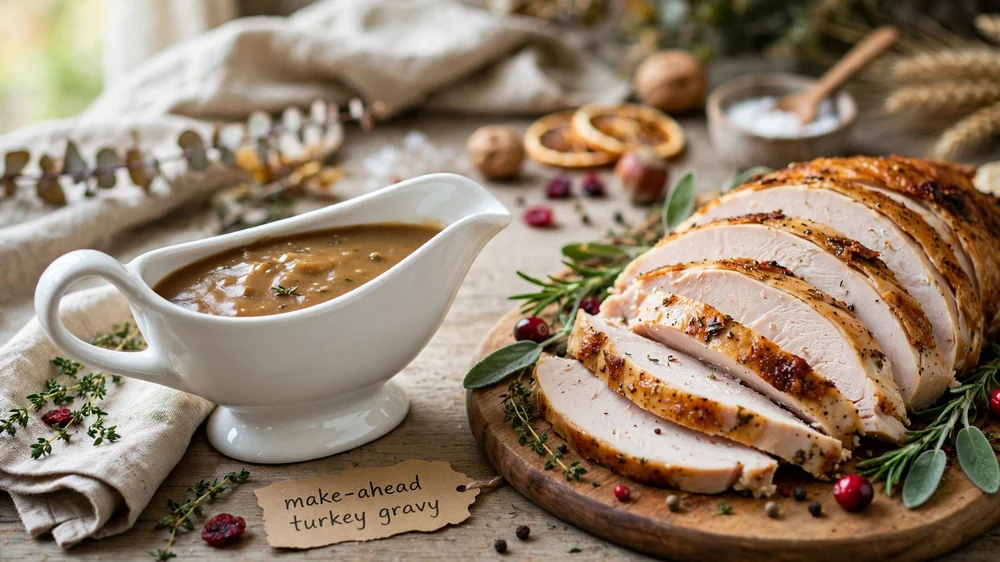
If you have ever stood over a roasting pan on Thanksgiving afternoon, whisk in one hand and a phone timer going off in the other, you know exactly why gravy feels stressful. The turkey is resting, the potatoes are waiting, everyone is asking when dinner will be ready, and you are supposed to magically turn pan drippings into something smooth and glossy in about ten minutes.
Here is the good news: you do not have to do it that way. This make-ahead turkey gravy is cooked, seasoned, and cooled days before Thanksgiving, then gently reheated while the turkey rests. It tastes like it came straight from the roasting pan, because it is built on real turkey flavour, not a packet. And on the day itself, gravy becomes the easiest job on your list, not the most frantic one.
For busy cooks, that shift matters. When gravy is already done, you can actually sit down for five minutes, carve without rushing, and enjoy the meal you worked so hard to make.
Why Make Gravy Ahead of Time
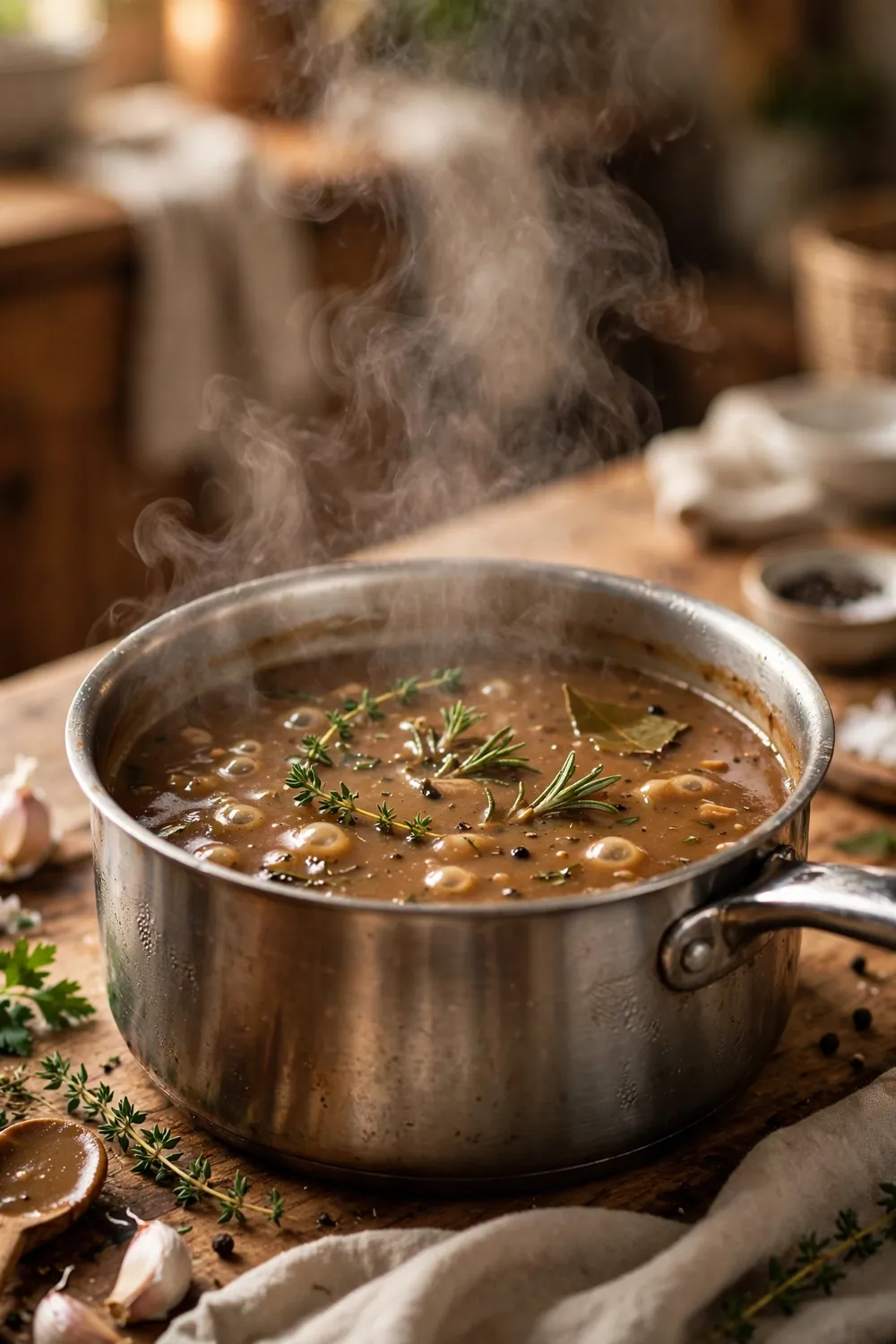
Thanksgiving gravy usually fails for one reason: timing. You are trying to make it at the exact moment everything else needs you. Making it ahead removes that pressure completely, and it also gives you a chance to taste and fix it calmly.
When you cook gravy a day or two early, the flavours settle. The salt balances, the herbs mellow, and the texture stays silky instead of turning gluey from rushed whisking. If it is a little thick, you thin it. If it needs more depth, you add a splash of stock. No one is watching, and no one is hungry yet.
Busy cooks also love this method because it frees up stove space on Thanksgiving Day. Your burners are already crowded with potatoes, green beans, and reheating dishes. A pot of gravy that only needs warming is a gift to yourself.
Ingredients You Will Need
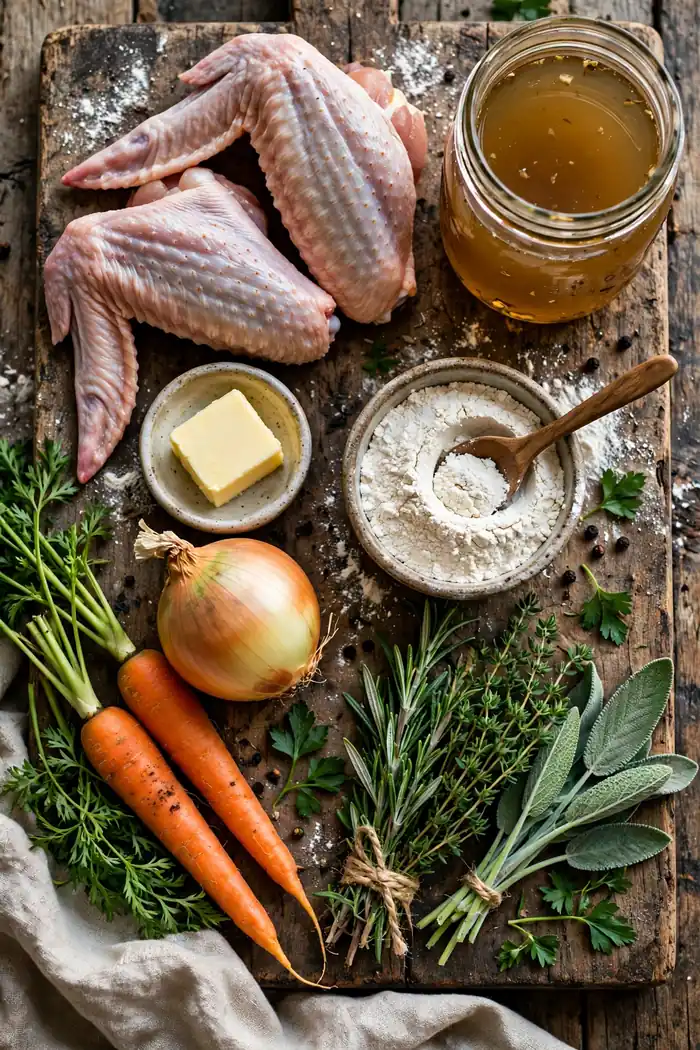
You do not need pan drippings to make good gravy ahead of time. Turkey wings, necks, or even a good quality turkey stock will give you that rich, roasted flavour.
You will need turkey wings or turkey necks, about 1 to 1.5 pounds, onion, carrot, and celery, fresh thyme and sage, butter, all-purpose flour, turkey or chicken stock, salt, black pepper, and a small splash of soy sauce or Worcestershire sauce for depth. That last ingredient is optional, but it adds a savoury note that makes the gravy taste like it simmered all day.
Keep the ingredient list short on purpose. Gravy should taste like turkey, butter, and herbs, not like a dozen competing flavours. If your stock is already well seasoned, go easy on the salt at first and adjust at the end.
How to Make It, Step by Step
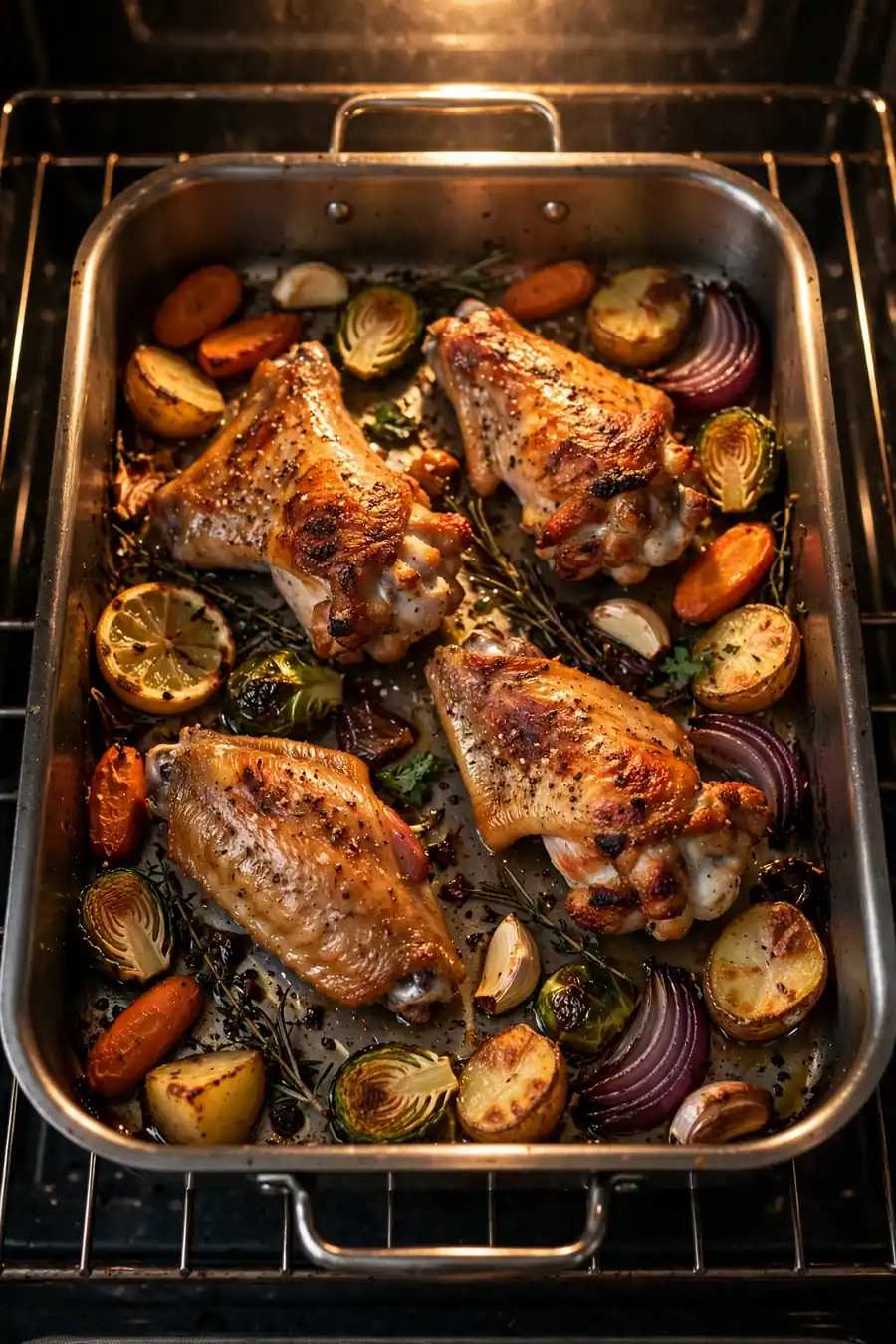
Start by roasting the turkey parts. Heat your oven to 425°F, toss the wings and vegetables with a little oil and salt, and roast until deeply browned, about 45 minutes. This browning is where the flavour comes from, so do not rush it or pull them out pale.
Next, move everything to a large pot, add the herbs and stock, and simmer gently for about an hour. You want a slow bubble, not a violent boil, which can make the gravy cloudy. Skim off any foam that rises to the top.
Strain the stock through a fine sieve, pressing gently on the vegetables to get every bit of flavour. Discard the solids. You should have a rich, golden stock that already smells like Thanksgiving.
Now make the roux. Melt butter in a clean pot, whisk in flour, and cook for two to three minutes until it smells nutty and turns light golden. Pour in the warm stock a little at a time, whisking constantly, until the gravy is smooth. Simmer for ten minutes until it coats the back of a spoon.
Taste it now, while you have time. Add salt, pepper, and that optional splash of soy sauce or Worcestershire. Cool it completely before storing, so it does not turn watery or develop a skin in the fridge.
The Busy Cook Timeline
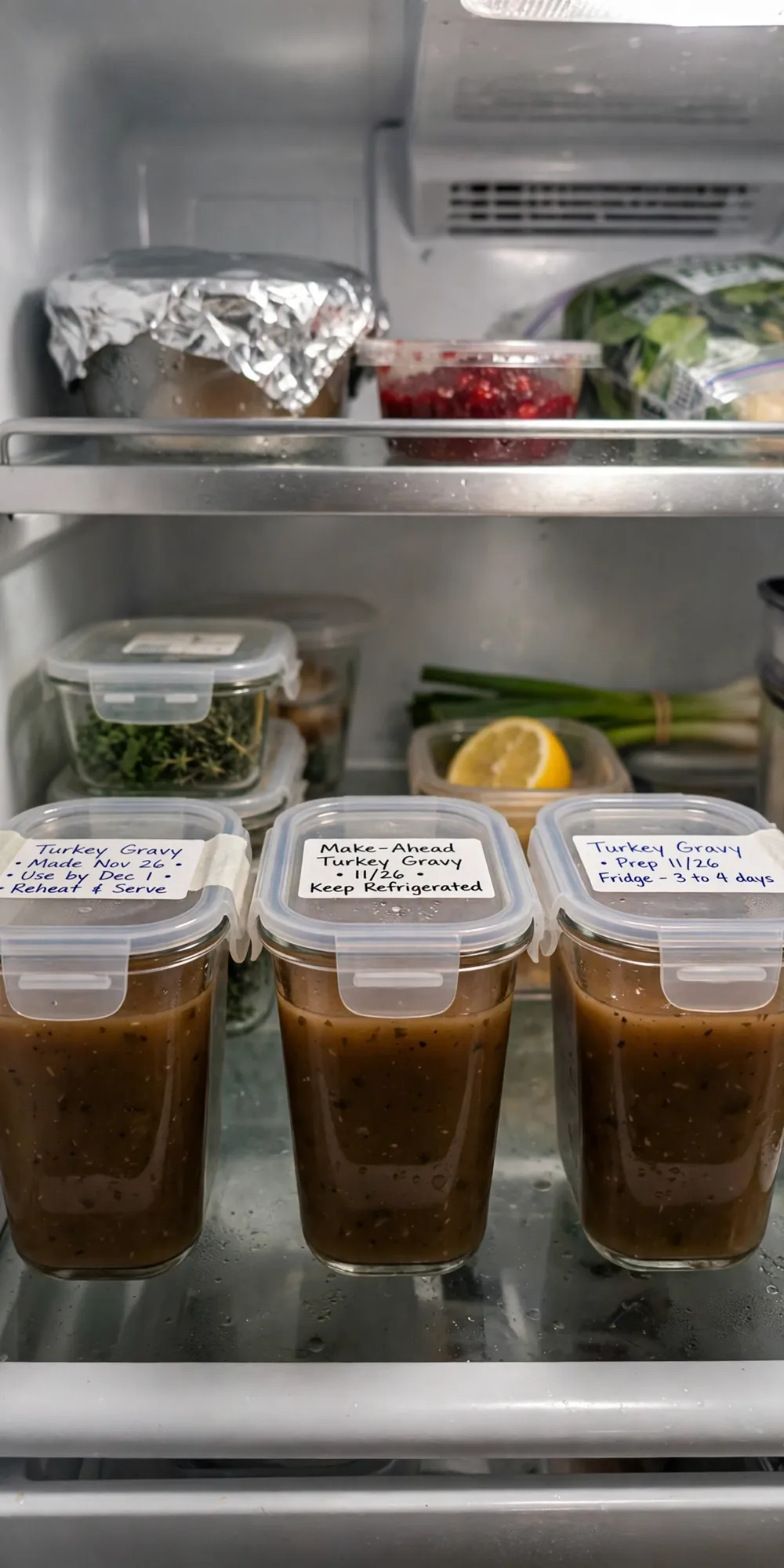
This is where the plan really pays off. Two days before Thanksgiving, roast and simmer, then refrigerate the finished gravy in a sealed container. It will keep perfectly for up to three days in the fridge, or up to three months in the freezer if you want to get even further ahead.
On Thanksgiving Day, pour the gravy into a saucepan while the turkey rests. Warm it over medium-low heat, whisking now and then. If it thickened in the fridge, add stock a splash at a time until it flows nicely. If you have real pan drippings from your turkey, stir in a spoonful or two at this stage for extra flavour, but it is delicious without them too.
That is the whole job on the day: warm, whisk, pour. No last-minute roux, no lumps, no panic.
Fixing Common Gravy Problems
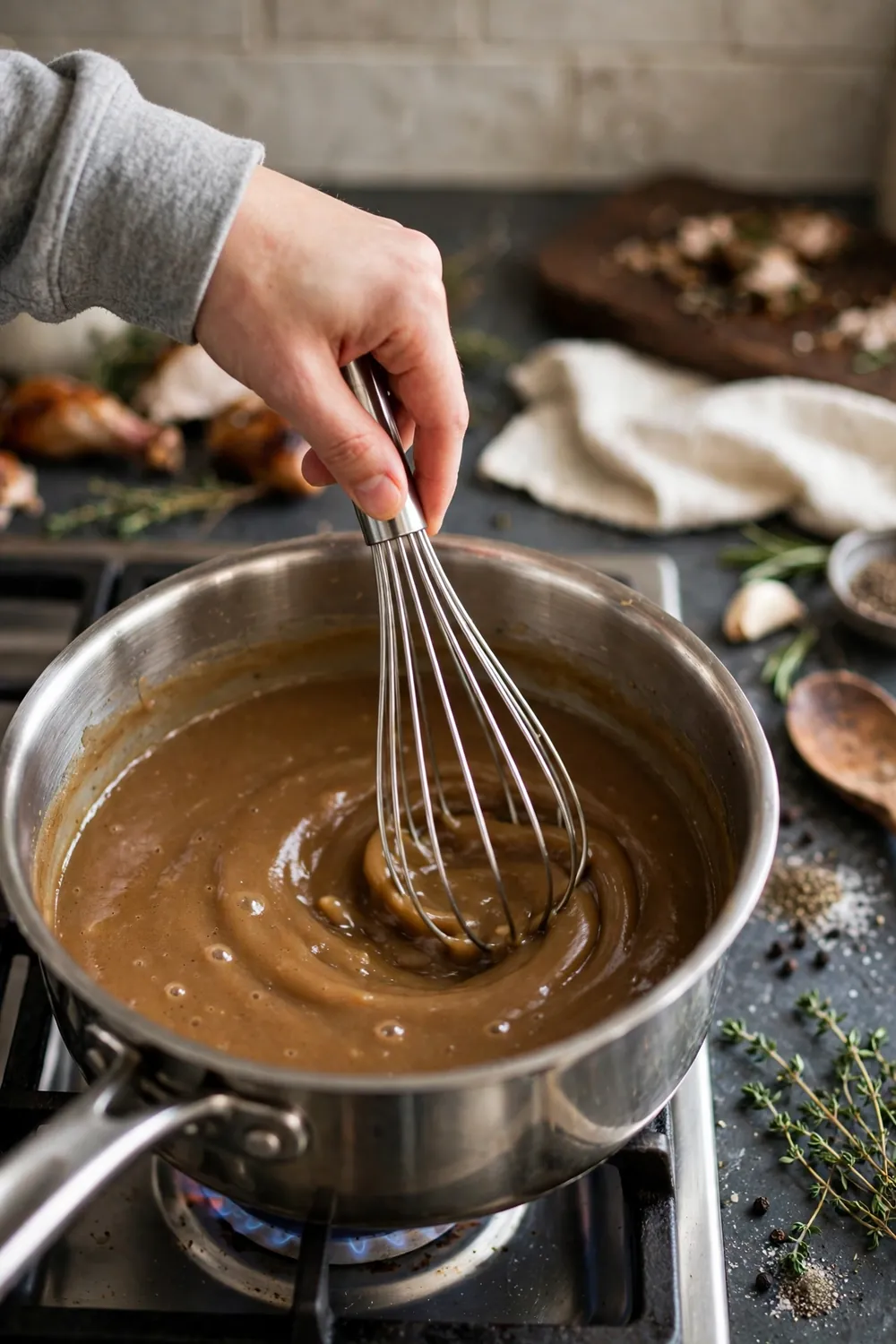
Lumpy gravy is the fear everyone has, and it is almost always fixable. If you see lumps, whisk vigorously for a minute, or pour the gravy through a sieve into a clean pot. It will come out smooth, and no one will ever know.
If the gravy is too thin, simmer it a few minutes longer, or whisk a teaspoon of flour into a little cold stock and stir that in. If it is too thick, thin it with warm stock, not water, so you do not dilute the flavour.
If it tastes flat, it usually needs salt or a touch of acid. A tiny squeeze of lemon is not traditional, but a very small amount can brighten the whole pot without making it taste lemony. Taste after every small addition, because you can always add more, but you cannot take it back.
What to Serve It With
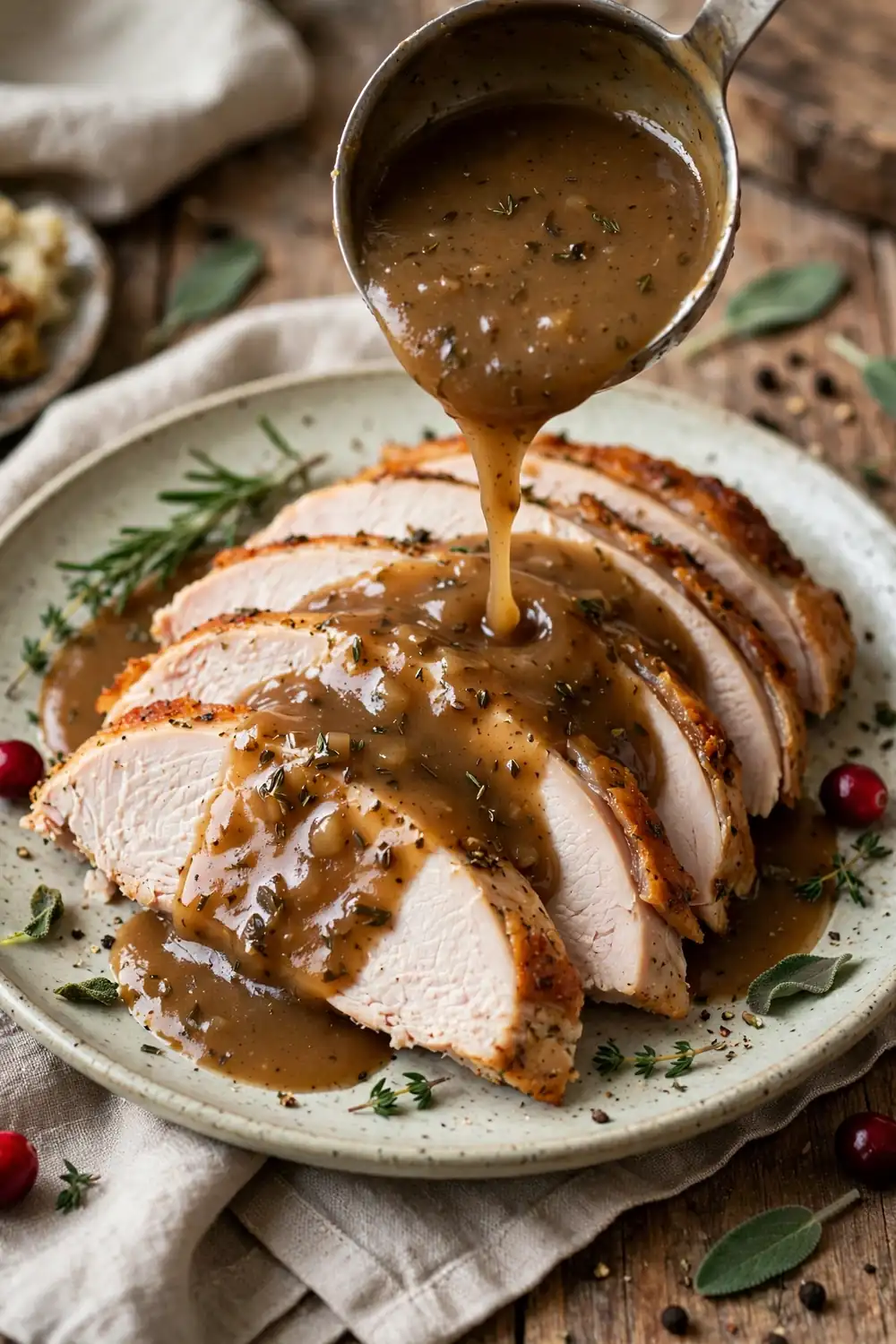
Gravy is the quiet hero of the Thanksgiving plate. It ties everything together, from turkey to mashed potatoes to stuffing. Pour it generously over sliced turkey, spoon it over potatoes, and let it pool a little around the stuffing, because that is exactly what it is for.
It also works beautifully the next day. Leftover turkey sandwiches, open-faced turkey melts, and even a simple bowl of mashed potatoes all improve with a ladle of reheated gravy. Make a little extra on purpose, if your pot allows it. Future you, standing in front of the fridge on Friday, will be grateful.
FAQ
Can I make turkey gravy without pan drippings?
Yes, absolutely. This recipe is built on roasted turkey wings and stock, so it has real turkey flavour without needing drippings. If you do have drippings on Thanksgiving Day, you can stir in a spoonful or two when reheating, but the gravy is complete without them.
How far ahead can I make it?
You can make it up to three days ahead and keep it in the fridge, or freeze it for up to three months. Thaw frozen gravy overnight in the fridge, then reheat gently with a splash of stock if needed.
How do I reheat gravy without it splitting?
Warm it slowly over medium-low heat and whisk often. Do not boil it hard. If it looks a little separated at first, steady whisking as it warms will usually bring it back together.
Can I double this recipe for a crowd?
Yes. Double all the ingredients and use a larger pot, but keep the simmer gentle and taste carefully before adding extra salt, since stock saltiness can vary. A doubled batch reheats just as well as a single one.