
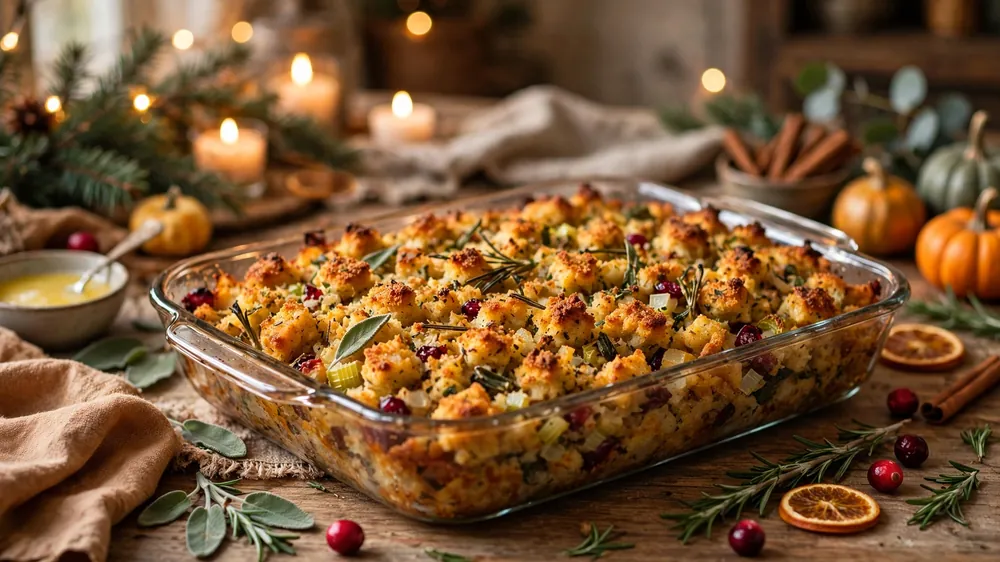
Every family has a stuffing opinion, and most of them are strong. Some people want it soft all the way through. Others will only eat the crisp, golden edges. Someone always asks if it was cooked inside the turkey, even though almost nobody does that anymore.
What nobody argues about is this: stuffing should not be the dish that ruins your Thanksgiving morning. Yet it often is, because it involves bread, butter, vegetables, stock, eggs, herbs, and a baking dish, all at the exact moment your kitchen is already full.
This make-ahead stuffing changes that rhythm. You assemble it the day before, let it rest in the fridge overnight, and bake it on Thanksgiving Day while the turkey rests. The top turns crisp, the centre stays soft and buttery, and you get to actually talk to your guests instead of chopping celery at the last minute.
Why Stuffing Works So Well Made Ahead
Stuffing is one of the few Thanksgiving dishes that genuinely improves with a night in the fridge. The bread soaks up the stock and butter slowly, instead of turning soggy in a rush, and the flavours of sage, thyme, onion, and celery have time to settle into every cube.
That overnight rest is also what gives you a better texture. When you bake stuffing straight away, the outside can dry out before the middle is properly heated. When it has rested, it bakes more evenly, with a crisp top and a tender, almost custardy centre, which is exactly the contrast people love.
For busy cooks, the real win is simpler: the messy part is done when you have time and counter space. On Thanksgiving Day, your only job is to put a dish in the oven and set a timer.
Choosing the Right Bread
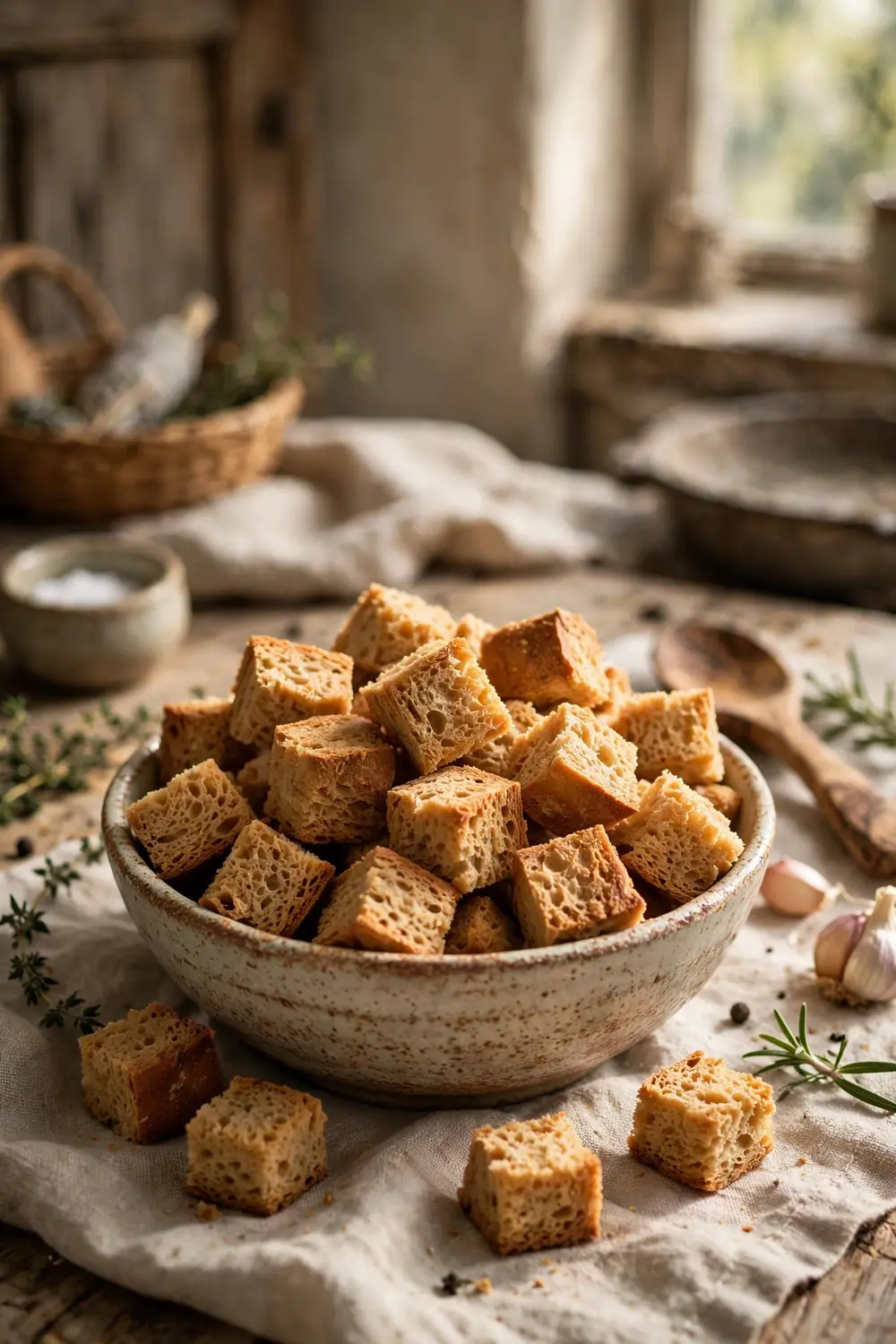
Bread choice matters more than any fancy ingredient. You want a sturdy, slightly dry bread that can absorb stock without collapsing into mush. A good white sandwich loaf, a country loaf, or a mix of white and whole wheat all work well, as long as the cubes are dried out first.
Cut the bread into roughly one-inch cubes and dry them in a low oven, about 300°F, for 20 to 30 minutes, stirring once. They should feel dry and lightly crisp, not toasted dark. If you are short on time, you can do this two days ahead and store the cubes in an airtight container.
Avoid very soft, fresh bread straight from the bag, and avoid strongly flavoured breads like rye or sourdough for a classic stuffing, unless that is a family tradition you are deliberately keeping. The goal is a stuffing that tastes like Thanksgiving, not like a particular bread.
If your bread is already a day or two old, that is actually an advantage. Stale bread dries out faster in the oven and holds its shape better once the stock goes in. Tear or cut it the night before you plan to dry it, leave the cubes out on a tray if you have the counter space, and you will find they need less time in the oven the next day. Busy cooks can use this to their advantage, because bread drying is one of those small jobs that fits easily into an evening, long before Thanksgiving week gets hectic.
Putting It Together the Day Before

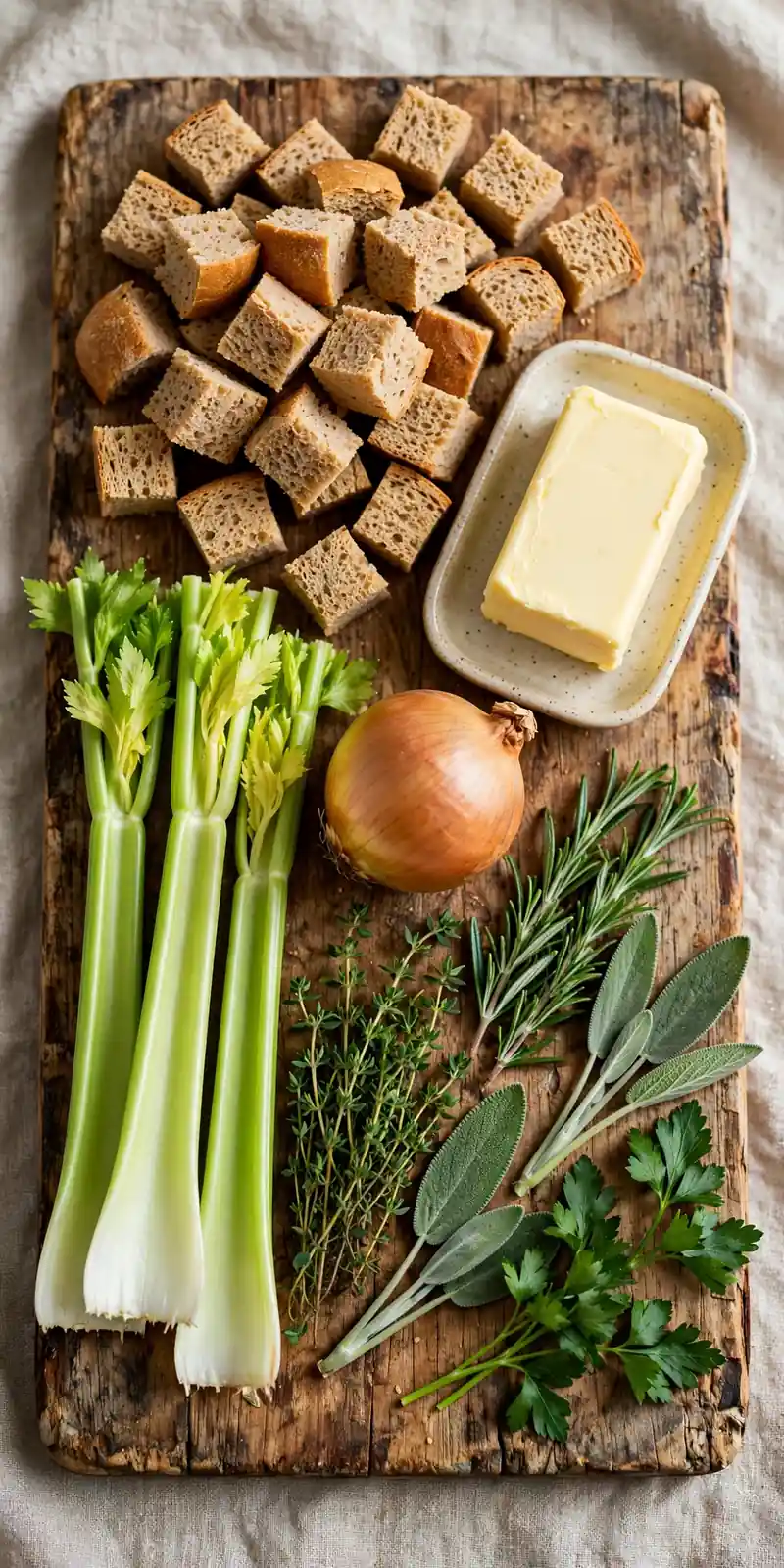
Melt a generous amount of butter in a large pan and cook diced onion and celery until soft and sweet, about eight to ten minutes. Add garlic for the last minute, then stir in fresh sage and thyme until fragrant. This mixture is the flavour base, so do not rush it.
In a very large bowl, combine the dried bread cubes with the cooked vegetables. Pour over warm stock, a little at a time, tossing gently as you go. You want the bread moist, not swimming. Add beaten eggs, salt, and plenty of black pepper, and toss again until everything is evenly coated.
Transfer the mixture to a buttered baking dish, press it down lightly, dot the top with a few small pieces of butter, cover tightly, and refrigerate overnight. That is it. Dinner prep for tomorrow is already half done, and your kitchen is clean before the big day even starts.
Baking It on Thanksgiving Day
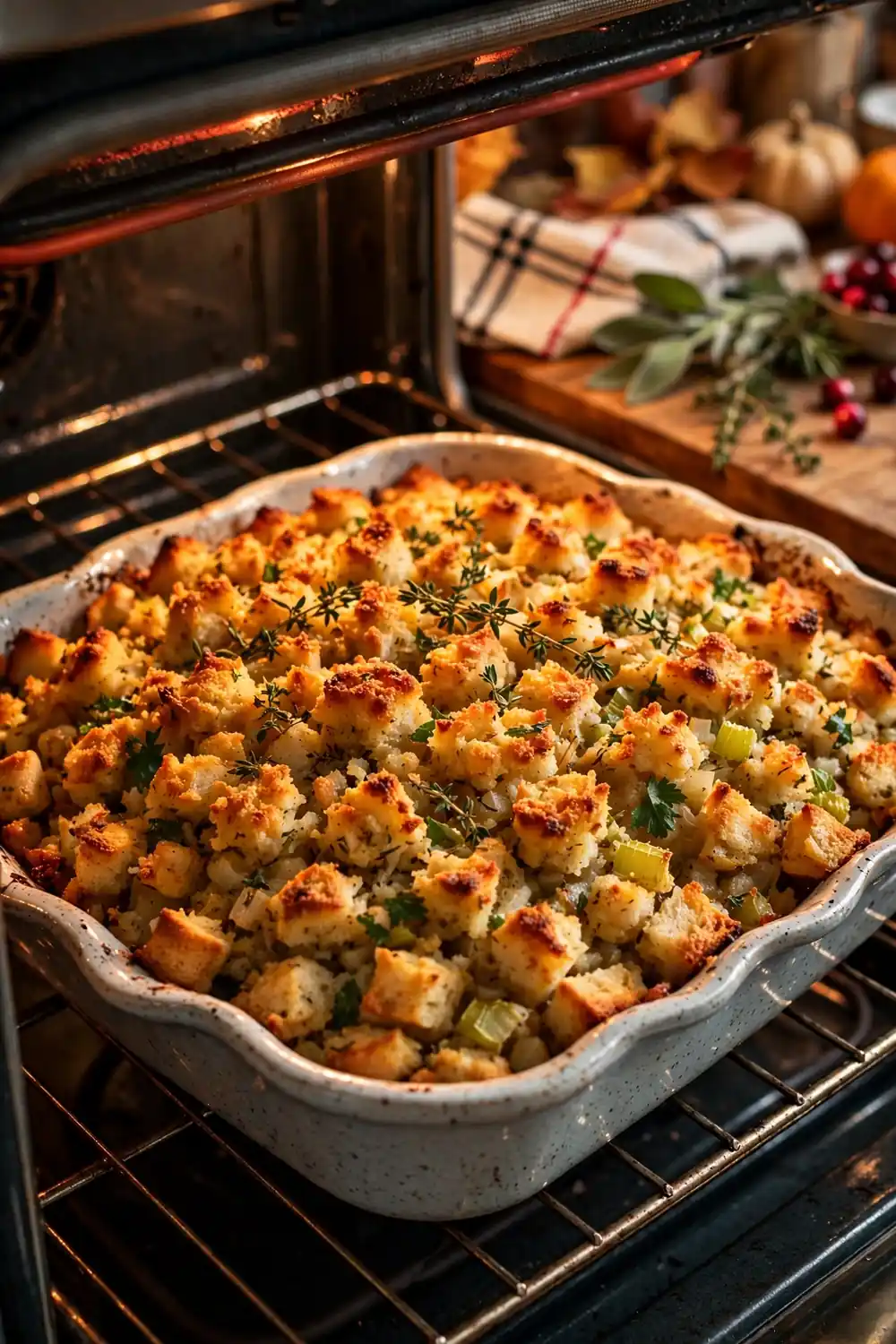
Take the dish out of the fridge about 30 minutes before baking, so it is not ice cold going into the oven. Heat the oven to 375°F. Bake covered for 25 minutes, then uncover and bake for another 20 to 25 minutes, until the top is deeply golden and crisp at the edges.
This is a perfect resting-turkey job. The turkey needs 20 to 30 minutes to rest before carving anyway, and that window is exactly when stuffing can finish baking and stay hot. If your oven is busy, you can also bake the stuffing earlier in the day and reheat it, covered, at 350°F for 15 minutes.
Let it rest for five to ten minutes before serving. It will hold its shape better when spooned out, and the centre will be soft without falling apart.
Variations Without Changing the Plan

Once you have this base method, you can adapt it without changing the timeline. Cooked sausage, sautéed mushrooms, toasted pecans, or dried cranberries can all be folded in at the mixing stage, as long as the total amount does not overwhelm the bread.
Keep any additions to about one to two cups total, and keep the stock amount roughly the same, adjusting by feel. If you add something wet, like mushrooms, you may need slightly less stock. If you add something dry, like nuts, you may need a splash more.
The make-ahead plan stays the same either way: assemble the day before, refrigerate overnight, bake on the day. That consistency is what makes this recipe reliable for busy cooks, year after year.
What to Serve It With

Stuffing belongs right next to turkey and gravy, and it is at its best with a generous spoonful of gravy over the top. It also pairs beautifully with mashed potatoes, cranberry sauce, and green beans, because it soaks up flavours from everything around it without losing its own character.
Leftovers are almost as good as the first serving. Warm stuffing with leftover turkey and gravy makes a wonderful next-day plate, and a scoop reheated in a pan with a little butter turns wonderfully crisp again. If you have extra, save it on purpose.
FAQ
Can I assemble stuffing the day before?
Yes, that is exactly how this recipe is designed. Assemble it fully, cover tightly, and refrigerate overnight. Bake it on Thanksgiving Day, covered first and then uncovered until crisp.
Will it dry out if I bake it twice?
Not if you bake it covered for the first part and only uncover it to crisp the top. If you are reheating leftovers, cover the dish and add a splash of stock before warming, so the centre stays moist.
Can I make stuffing without eggs?
You can, but the texture will be a little looser and less custardy. Eggs help bind the bread together. If you skip them, press the mixture down firmly in the dish and add a little extra stock, a splash at a time, until it holds together when pressed.
How long does leftover stuffing keep?
Leftover stuffing keeps for three to four days in the fridge in a sealed container. Reheat it in the oven, covered, at 350°F, or crisp small portions in a buttered pan for the best texture.